Liana Shanti: A Cautionary Tale of Spiritual Leadership and Deception
The Backstory
INDEX MENU
The Legend of Lemuria and Its Exploitation
The Health and Wellness Industry Landscape
Investigations and Testimonials
Psychological Tactics and High-Control Dynamics
Controversies and Legal Issues: Parental Abductions by Liana Shanti’s Followers
Liane Wilson: The Self-Proclaimed Abuse Advocate
The 12D Business School: A Dubious Venture and Rebranding
Financial Controversies and Bankruptcy Fraud
Financial Exploitation of Vulnerable Individuals
The 2026 Federal Defamation Trial
What the Court Ruled Before Trial
The Website She Claimed, Then Denied
The Evidence That Did Not Arrive
Good Things Don’t Last Forever
About Liana Shanti: Introduction
Liana Shanti—also known as Liane Wilson of Princeville, Hawaii—is a former real estate agent and timeshare sales representative who is currently under probation supervision ending December 2026 following a felony conviction for bankruptcy fraud. Despite this, she has meticulously crafted a multi-layered online persona, claiming to be a psychic, self-made multimillionaire entrepreneur, lightning-strike survivor (with an additional three unrelated near-death experiences), medium since the age of two, Akashic record reader, visionary, spiritual leader, shaman, and nutritionist. She also frequently asserts that she holds five academic degrees.
Her sweeping list of self-assigned titles is designed to position her as an expert across a wide range of disciplines and appeal to individuals searching for guidance or transformation. However, the legitimacy of her credentials and claimed experiences has been repeatedly called into question. Notably, during court proceedings, eyewitnesses have directly refuted her carefully curated online image, stating she is not the person she portrays herself to be on social media. In the largely unregulated realm of spiritual and wellness coaching, such unchecked self-promotion can mislead vulnerable individuals—making critical evaluation of her claims not only prudent, but necessary.
Background and Career Shift
Liane Wilson graduated from Pace University (New York) in 1998, where she studied law. After 911 in 2001, she “claims” to have moved to Hawaii, which she describes as being located on the ancient grounds of Lemuria. Judging by the background Wilson shares publically, she claims to have left New York immediately after Sept 11 and the birth of her daughter; therefore, it seems that her professional legal background was limited to a brief stint (approx. 18 months) as a lawyer in New York State before transitioning eventually to sell timeshares in Hawaii. This change eventually began her involvement in the nutrition and spiritual coaching world. The specifics of her training remain unclear.
The Legend of Lemuria and Its Exploitation
The legend of Lemuria, often referred to as a lost ancient continent, holds significant mystical appeal, particularly among New Age spiritualists and psychics. Some believe Lemuria was an advanced civilization, filled with spiritually enlightened beings, and that its remnants lie beneath the Hawaiian Islands. This myth is frequently exploited by cult leaders and psychics in Hawaii who claim to channel ancient Lemurian knowledge or offer spiritual connections to these “sacred” lands. By invoking the mystery and allure of Lemuria, one can create an aura of legitimacy and spiritual authority, enticing followers who seek esoteric wisdom and a deeper connection to the divine. This often comes at a significant cost to follower’s well-being and their pocketbooks.
The Health and Wellness Industry Landscape
The health and wellness industry, including the psychic and New Age sectors, has grown rapidly as of late, now valued at over $4 trillion globally. Due to this expansion, many unregulated practitioners have emerged making questionable claims about their qualifications.
Liana Shanti presents herself as a spiritual healer and nutritional expert, claiming to be a Certified Clinical Nutritionist and founder of the Health Mastery Institute (HMI). However, the Certified Clinical Nutritionist Certification Board has disproved her certification claim, advising Hawaii Courts in July 2023 . Some of her other credentials appears vague, embellished, or unsubstantiated, raising doubts about their legitimacy. In the new online coaching industry with minimal regulations, it is crucial for individuals to critically assess the credentials of those offering guidance online.

Beliefs and Teachings
Shanti promotes spiritual awakening and personal empowerment through the Lemurian Mystery School and her controversial Health Mastery Institute (HMI), which offers a range of health coaching services, nutrition advice, and coaching certification programs alongside various “protocols.” Courses at HMI include Holistic Dental Healing, claiming to repair damaged teeth, and Holistic Healing Cancer, which purports to explain cancer’s causes and recommend methods for “what stops it.” Critics have raised concerns over the overlap between HMI’s spiritual coaching and nutritional services, which promote unorthodox practices such as coffee enemas and parasite cleanses.

Shanti’s other courses explore topics like the Mother Wound, Father Wound, and Narcissism, as well as Magnetic Money Manifesting (MMM)—a program centered on the belief that individuals can energetically attract financial abundance through affirmations, mindset shifts, and trauma-based emotional clearing. While some followers report personal breakthroughs through MMM, others have raised red flags about the high costs and potential for psychological or financial vulnerability. Because this teaching touches on areas of mental health, financial advice, and trauma recovery—domains typically regulated in professional practice—it is essential to examine the legal and ethical implications closely.
One mother’s struggle to rescue her daughter from Shanti’s influence was featured on The Cult Vault podcast (Episode 245) in a three-part series released on April 28, 2023, available in the media section of this website. While many individuals report feelings of empowerment and support in Shanti’s programs, critics caution that such high-control environments can sometimes foster dependency or suppress critical thought.
Additionally, many followers have reported that Shanti’s health regimens, promoted through HMI, have come under scrutiny for their safety and efficacy. In several family court proceedings, concerns have been raised over medical neglect and alternative treatment approaches involving children, as associated protection agencies.
As always, readers are strongly encouraged to conduct their own research when evaluating programs like Magnetic Money Manifesting (MMM). Using online tools, you can explore multiple perspectives on Magnetic Money Manifesting and investigate the broader legal and ethical discussions surrounding Liana Shanti and spiritual coaching, consumer protection, and unlicensed therapeutic advice. Personal due diligence is crucial when engaging with teachings that claim to transform one’s finances, health, or emotional well-being.
Investigations and Testimonials
Investigative reporting by cult expert Jennings Brown has brought significant attention to psychic and Akashic record reader Liana Shanti (Liane Wilson), often referred to as the Lemurian Sisterhood. In his Daily Beast exposé titled The Lemurian Sisterhood, Brown delves into the internal culture of the group and outlines serious concerns raised by ex-members. Shanti, who has publicly claimed to possess psychic abilities and to access the Akashic Records—a spiritual concept described as an ethereal library of every soul’s past, present, and future—has also asserted that she communicates with the dead as part of her teachings. The article features testimonies from six former followers and 19 concerned family members, who collectively describe emotionally coercive practices presented as spiritual growth. Additional materials—including emails, testimonials, and screenshots—appear to support allegations that some participants were pressured to reinterpret past experiences of emotional or sexual trauma under the guise of spiritual revelation. While the legal implications of these claims are still unfolding, the evidence points to troubling psychological and ethical questions surrounding Shanti’s methods and leadership.
Former members have shared vivid personal accounts of their time within the group, often describing prolonged psychological distress, dependency on Shanti’s teachings, and punitive responses to dissent or critical inquiry. Several report being reprimanded or publicly shamed for expressing skepticism, reinforcing an environment in which unquestioning loyalty was expected. For many, the process of leaving the group was accompanied by confusion, emotional disorientation, and the loss of a tightly controlled support network—hallmarks consistent with high-control group structures.
Following the article’s publication, Shanti (legal name: Liane Wilson) publicly dismissed the reporting, alleging that no direct victims were consulted. However, Brown’s investigation clearly states that 25 individuals—including six former group members—provided firsthand accounts. According to multiple former participants, Wilson responded by characterizing those who spoke out as “dark” or “demonic,” and cautioned her followers against reading the article—an apparent attempt to maintain internal narrative control.
These documented accounts contribute to a growing body of concern over Shanti’s influence and the long-term emotional effects her teachings may have on vulnerable individuals. While followers may initially seek empowerment or healing, the reports of isolation tactics, emotional dependency, and spiritual manipulation underscore the need for continued scrutiny. As with any organization involving intensive personal transformation, once again, readers are encouraged to exercise critical thinking and conduct their own research—including through platforms like ChatGPT—to evaluate the legal, psychological, and ethical dimensions of such programs.
Psychological Tactics and High-Control Dynamics
One of the most concerning aspects of Liana Shanti’s influence is her use of psychological tactics to maintain control over her followers. Cult experts note that her methods resemble those of other high-control groups, involving strategies like isolation from family and friends, an intense emphasis on obedience, and the demonization of anyone who questions or criticizes Shanti. These tactics, which have not been very subtle, are highly effective, fostering a dependency on Shanti’s guidance that often harms followers’ mental health and strains their personal relationships.
Four prominent cult experts—Steven Hassan, Rick Ross, Dr. Janja Lalich, and Joe Szimhart—are very aware of Shanti’s Lemurian Sisterhood, with some identifying disturbing signs of high-control dynamics. In an interview with The Daily Beast, Dr. Lalich, an expert on cult behaviors, described the group as having “all the hallmarks of a cult,” noting that Shanti is positioned as the ultimate authority within an all-encompassing belief system where the ends justify the means.
Joe Szimhart conducted a thorough three-part analysis of Shanti’s teachings starting in September 2022.accessible here. At the same time, Rick Ross, founder of the Cult Education Institute, has received numerous posts from families affected by Shanti’s influence on his bulletin board. One family member recounted a harrowing journey in 2016 to rescue friends from what they perceived as Shanti’s overpowering control.
Collectively, these experts identify a pattern of fear tactics, emotional manipulation, and control over personal relationships within the Lemurian Sisterhood, drawing strong parallels to other well-documented cult-like groups. They argue these methods are central to Shanti’s influence over her followers, raising serious concerns about the potential impact on members and their families.
Many former followers describe a gradual change in their thoughts and behavior, becoming increasingly cut off from loved ones who expressed concerns about their involvement. Shanti allegedly fosters an “us versus them” mentality, presenting herself and her teachings as the sole path to spiritual enlightenment. This groupthink approach can have serious psychological effects, leading followers to ignore warning signs and dismiss the concerns of outsiders.
Controversies and Legal Issues: Parental Abductions by Liana Shanti’s Followers
Liana Shanti’s influence has been tied to multiple cases of parental abductions in 2021 and 2022, where followers, often women, removed their children from their homes. Shanti’s teachings, particularly the “Mother Wound” and “Father Wound” courses, encouraged followers to sever ties with family members deemed toxic; these courses, along with conspiratorial rhetoric coached by Liana Shanti in her “closed group,” seemed to be a precursor to the abductions and increased their urgency.
In recent developments, follower(s) who have left Shanti’s organization have made public statements alleging that Shanti personally coached them in how to carry out these abductions and where to relocate. These statements seem to be corroborated by chatroom submissions to the Hawaii court relating to Wilson’s probation hearing. Additionally, several families have written victim impact statements to the Hawaii courts, notifying the judge then overseeing Liane Wilson’s probation, Judge Susan Oki Mollway, regarding accusations of Wilson’s nefarious activities and influence over her followers.
Following Judge Mollway’s move to inactive status in June 2025, the criminal case was reassigned to Senior United States District Judge Helen Gillmor. On 2 June 2025 Wilson moved to have her probation terminated early. Both the United States Probation Office and the United States Attorney’s Office opposed the motion, each citing claims that Wilson had defrauded people while under supervision — allegations the court recorded as having required investigation but as not having been confirmed. On 20 June 2025 Judge Gillmor denied the motion, finding that the nature and circumstances of the underlying offence, the need for deterrence, the need to promote respect for the law and the need to protect the public all weighed in favour of continued supervision. The five-year term of probation stands, and is due to expire in December 2026.
As a result of these abductions, many women lost custody of their children through court rulings, with family courts and legal officials acknowledging Shanti’s influence as a form of parental alienation. The legal battles have caused significant financial and emotional distress, as followers endured costly legal fees while still under Shanti’s influence.
In early 2022, several families who contacted public officials to alert law enforcement about concerns related to Liana Shanti were subsequently subjected to coordinated online harassment. This pattern of harassment was driven by Ms. Shanti’s repeated public characterization of these individuals as “abusers,” “dark,” or “demonic.” As the campaign escalated, Shanti (Wilson) began publicly accusing dissenters of pedophilia—allegations which were amplified via her Instagram account and on external websites she created for the express purpose of discrediting and intimidating those who challenged her narrative. These actions fostered a climate of fear, reputational injury, and emotional distress, significantly impacting families attempting to recover from the psychological and social consequences of her influence.
These cases underscore the dangers of unregulated spiritual leadership, in which followers are manipulated into making life-altering decisions that have devastating emotional and financial consequences.
Liane Wilson: The Self-Proclaimed Abuse Advocate
During the summer and fall of 2022, following outreach by several families to public officials and law enforcement, Liane Wilson (also known as Liana Shanti) publicly rebranded herself as an abuse recovery advocate. She began positioning herself as a supporter of individuals healing from toxic relationships and childhood trauma, promoting concepts such as the “Mother Wound” and “Father Wound” as tools for empowerment. However, this shift in public persona coincided with increasing scrutiny of Wilson and her followers, stemming from a series of parental abductions reportedly influenced by her teachings (see above). As her name surfaced in multiple family court proceedings, Wilson appeared to recalibrate her narrative—portraying herself as a champion for the same victims she was accused of coercively influencing.
This newly assumed advocacy role stands in direct contradiction to Wilson’s own sworn 2015 testimony in Hawaii, in which she defended a former spouse against serious allegations including rape, kidnapping, and assault. The inconsistency between her past support for an accused abuser and her current public identity as an advocate raises significant concerns about the credibility and authenticity of her claims.
Further undermining this self-proclaimed advocacy, Wilson and her followers engaged in repeated social media attacks against estranged family members of her followers—often accusing them of heinous acts without substantive evidence or legal proceedings. These public and defamatory statements, lacking factual substantiation, intensified the emotional and legal distress experienced by already vulnerable families. The timing and nature of Wilson’s online conduct, juxtaposed with her declared advocacy efforts, have raised legitimate doubts regarding the integrity and motive behind her public transformation.
The 12D Business School: A Dubious Venture and Rebranding
In April 2022, amidst growing controversies and legal scrutiny, Liana Shanti launched the 12D Business School, marketed as a spiritual entrepreneurship program. The launch of Shanti’s Business School came just a month after the parental abductions were linked to her followers, raising suspicions that this new business initiative was an attempt to distract from mounting public and legal scrutiny while capitalizing and perhaps monopolizing on her influence over her followers during the ongoing abduction crisis.
Shanti initially claimed that the school would guide spiritual entrepreneurs in building successful businesses, charging a $4,000.00 USD enrollment fee. However, on September 26, 2024, she later revealed that the curriculum had only just been completed after two and a half years and boasted about a “seven-figure launch.” During the following two and a half years, students were left waiting for promised content, with sporadic and unstructured releases. This inconsistency raised concerns about the credibility and value of the program.
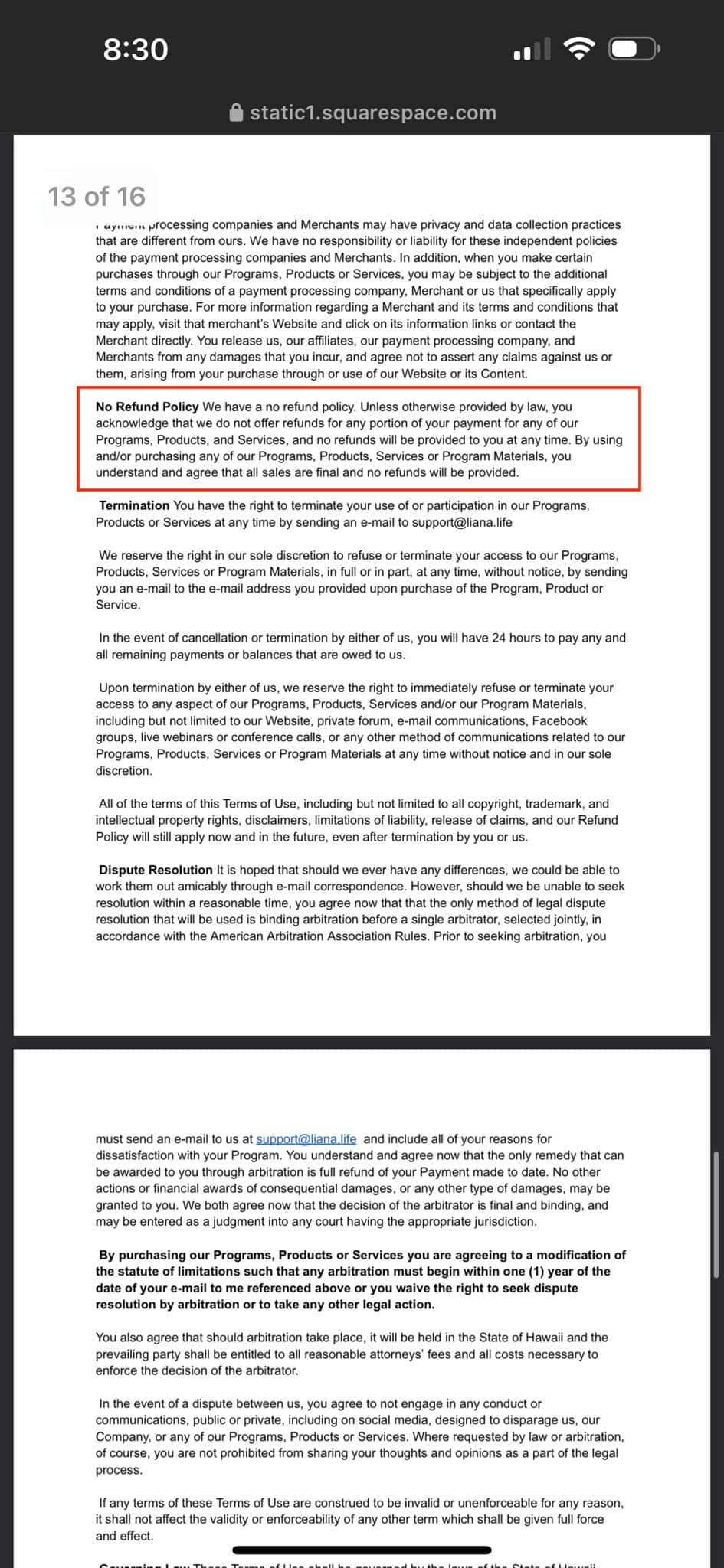
Adding to the controversy, Shanti’s financial history, marked by bankruptcy fraud and real estate disputes, may cast doubt on her qualifications to guide others in business endeavours. Furthermore, the strict no-refund policy put in place left dissatisfied clients without recourse for financial losses. Students unhappy with the services may also feel intimidated from voicing their grievances, given Wilson’s track record of public humiliation through her online Instagram account, where previously she malicious attacked families with vile accusations, shaming critics and dissenters. Her website clearly states that she is “not responsible for financial outcomes related to her services,” putting potential clients at risk.
In July 2024, Shanti rebranded the 12D Business School Instagram as Female Fortunes, presenting herself as a “money mentor” who helps individuals achieve rapid financial success. The rebranding, however, raised further skepticism, as it did little to address the concerns surrounding the unfinished curriculum and delayed module releases from the original program. Critics argue that this rebranding was an attempt to distance the program from its earlier controversies, but the structural and ethical concerns remain.
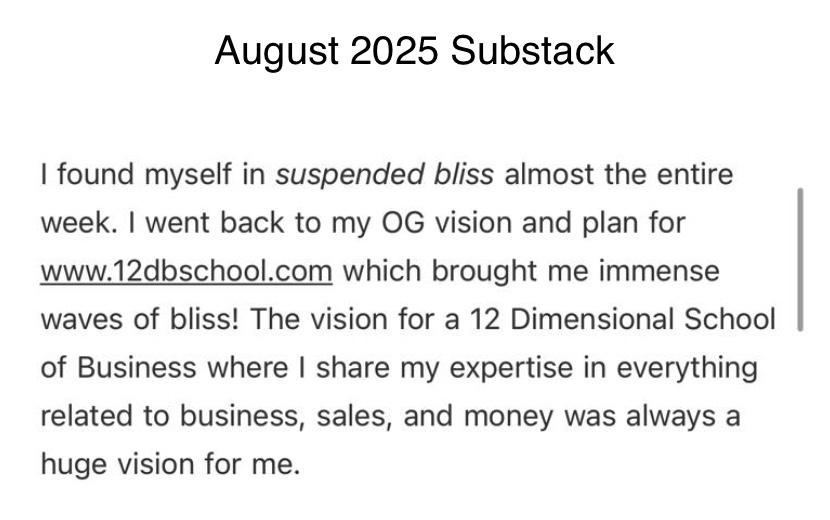
Update: As of August 2025, it now appears that Liane Wilson may have dropped the Female Fortunes and possibly reverted back to 12D_B_School according to her Substack.
Financial Controversies and Bankruptcy Fraud
A significant aspect of Liana Shanti’s controversial history involves her financial practices, particularly related to bankruptcy fraud. It was revealed that Liane Wilson received $333,000.00 USD in insurance disability payments, which were funnelled into a third-party account without the knowledge of her bankruptcy trustee. This serious breach of trust and transparency raises questions about her financial integrity.
In 2019, new information surfaced revealing that Wilson had hidden additional assets during her original bankruptcy proceedings. This led the United States Justice Department to file charges against both Liane and her live-in partner Robert Beard. As a result, in December 2021, Liane and Robert were ordered to serve five years of probation for their involvement in the fraudulent activity and pay a fine.
Adding to her troubled financial history, Liana’s mother, Linda Wilson, filed a lawsuit against her, which the plaintiff’s attorney characterized as involving title fraud, as noted in the public docket. This legal entanglement clearly indicates ongoing issues within Liane Wilson’s professional and personal dealings.
Additionally, several real estate lawsuits have been filed against her, including a recent judgment for failing to fulfill obligations related to a real estate transaction. Reports suggest that she has had properties tied to foreclosure, which casts doubt on her financial management skills.
Most recently, in September 2024, Wilson “voluntarily surrendered her Hawaii real estate license” due to allegations of fraud during the application process. These allegations led to the voluntary surrender of her real estate licence, as reported in the Hawaii Free Press, further damaging her credibility and raising more concerns about her financial and professional ethics.
Despite these financial controversies and the appearance of financial hardship, Liana Shanti continues to claim that she is a self-made multi-millionaire, often promoting this narrative in her business coaching programs and on her social media platforms. However, the discrepancies in her financial history raise serious concerns about the legitimacy of these claims.
Furthermore, Wilson’s background reveals a history of multiple restraining orders connected to her. This pattern of legal conflict adds further complexity to her troubled legal history, suggesting ongoing disputes in both her personal and professional life.
These incidents of financial impropriety contribute to a growing list of concerns regarding her credibility, raising serious questions about her ability to lead and guide anyone in personal and business ventures.
Financial Exploitation of Vulnerable Individuals
Liana Shanti’s practices have raised concerns about the financial exploitation of vulnerable individuals seeking spiritual guidance, as many followers invest significant amounts into her programs like the Health Mastery Institute and 12D Business School, often without clear evidence of benefits. Courses can cost up to $4,000, while her private mentorship program charges $100,000 for a business plan, imposing considerable financial pressure on followers. The combination of high costs and a strict no-refund policy creates an environment where individuals are financially committed, often to their detriment.
Shanti’s questionable financial practices, such as her bankruptcy fraud and allegations of misleading business ventures, raise red flags about the legitimacy of the services she offers. Many individuals who have followed her teachings have reported feeling financially exploited, especially when programs failed to deliver the promised outcomes. The lack of transparency regarding her qualifications and business operations has left numerous clients financially strained and emotionally manipulated.
Impact on Followers
While some followers may find solace in Shanti’s teachings, the experiences of those who have distanced themselves from her, reveal a complex and often troubling dynamic. Many report feelings of confusion and betrayal after leaving her community, illustrating the potential psychological impact of high-control groups. The environment she fosters can pose risks to individual well-being and public safety.
Many of Liana’s followers have also recounted experiencing emotional manipulation, financial exploitation, and lasting psychological harm. Shanti’s teachings, especially around the “Mother Wound” and “Father Wound”, often encourage followers to sever ties with loved ones, leading to isolation and strained or severed relationships. As followers grow more dependent on her guidance, they become cut off from outside influences that might provide a more balanced and realistic perspective.
Shanti’s use of public shaming on social media further discourages dissent, with many ex-followers afraid to speak out for fear of being humiliated and their deepest secrets revealed. This high-control dynamic, alongside the emotional and financial strain, has left many former followers struggling to rebuild their lives after their involvement with Shanti and her organization.
The 2026 Federal Defamation Trial
In December 2022 Liane Wilson and her company, Life Mastery Network LLC, sued Paula Haygarth and Byron Horvath in the Circuit Court of the Fifth Circuit in Hawai‘i, case 5CCV-22-0000107. The two were not distant commentators on Wilson’s work. They were people whose own families had been affected by Wilson’s community, and who by then had spent years as the subject of her public statements about them. In July 2025 Wilson amended her complaint to add further claims and to name a third defendant, Stefanie Horvath; the defendants then removed the case to the United States District Court for the District of Hawai‘i, where it proceeded as Life Mastery Network LLC v. Haygarth, No. 1:25-cv-00297-JAO-RT. All three counterclaimed, alleging that Wilson had defamed them and their family members.
What the Court Ruled Before Trial
On 22 May 2026 United States District Judge Jill A. Otake ruled on the parties’ pre-trial motions and narrowed the case considerably. Most of what Wilson had brought was dismissed — her claims over Paula Haygarth’s Facebook post, over the letters the defendants had written to the judge in her federal criminal case, and her claim for negligent infliction of emotional distress. What remained rested on a single foundation: a set of anonymous online posts she alleged the defendants had written.
The report she relied on to identify those anonymous authors did not carry her the rest of the way. Its author was not permitted to tell the jury who he believed had written the posts, and he had already acknowledged under oath that part of his reasoning was “pure . . . speculation.”
Ruling for the defendants on one of their counterclaims, the court held that Wilson’s published statements that Paula Haygarth had abandoned her own child were defamation per se as a matter of law, leaving only the question of damages for the jury.
The same order settled one further point of law. The court held that Wilson is a general purpose public figure — a status her own counsel conceded, and which the court based on her business website, her social-media following and her customer numbers. The consequence is that to win a defamation claim she must prove actual malice: that a statement was published knowing it was false, or with reckless disregard for the truth. That standard is what protects former members, their families and journalists who describe what they experienced. The holding is set out more fully on the court cases page.
Three further matters were settled before the jury was asked anything at all: a website Wilson had taken credit for in one federal proceeding and denied creating in this one, the death threats she had alleged, and the stalking she had alleged. Each is set out below.
The Website She Claimed, Then Denied
The same order records a direct contradiction between what Wilson told the judge supervising her criminal probation and what she later swore in the defamation case.
In August 2023, responding to the letters families had sent to Judge Susan Oki Mollway, Wilson submitted a Position Statement in United States v. Wilson. In it, the court found, “she proudly discussed creating the Exposing Family Abuse website for her advocacy work.” In the defamation case she swore the opposite: “in the instant case, Liane denies creating the Exposing Family Abuse website at all.”
Wilson’s counsel had redacted the website’s name from the public version of that Position Statement. The court unsealed it, finding “no reasonable basis for that information to remain confidential, especially because the context of the public version nonetheless establishes a diametric inconsistency.”
The defendants asked the court to sanction Wilson for submitting a declaration in bad faith. It declined, on a narrow ground: her Position Statement to Judge Mollway had not been sworn under oath, so there were not two sworn statements to set against each other. As the court put it, “while she did declare under penalty of perjury here that she did not create the problematic website,” the difference between the two documents was not by itself enough for a bad faith finding, and “it is not for this Court to determine which of the two statements is false.”
The court did not leave it there. “Nevertheless, this conduct is troubling,” it wrote. “At best, Plaintiffs’ counsel misinterpreted Liane and neglected to diligently read the Position Statement she submitted in United States v. Wilson, and Liane then failed to thoroughly read her own declaration and correct the mistake before signing it. At worst, Liane intended to mislead this Court or Judge Mollway.”
It is worth being precise about what this is and is not. The court made no finding of perjury and imposed no sanction. What it recorded is that Wilson took credit for the website in one federal proceeding and denied creating it, under penalty of perjury, in another.
The Evidence That Did Not Arrive
Two of the allegations Wilson had carried through the case never reached the jury, because the evidence for them no longer existed.
On 10 July 2026 the court granted the defendants’ first motion in limine and excluded all evidence of the death threats Wilson alleged she had received. The exclusion was a sanction under Rule 37(e) of the Federal Rules of Civil Procedure, which governs the loss of electronically stored information. The court found that Wilson “should have preserved the actual voicemail with its metadata in anticipation or conduct of litigation given Plaintiff alleges Defendants engaged in a pattern of virulent behavior.”
She had been telling the public otherwise for years. In November 2022 she posted that Byron Horvath had made death threats against her, her husband, her ex-husband and a woman in her community, and that “several of these are recorded on voicemails.” That same month she announced a new website that would expose the people she said had “made recorded voicemail death threats.” She was still referring publicly to the recordings in December 2023.
Asked about them under oath on 16 January 2025, she was vague. Were the voicemails still on her phone? “I don’t know if they’re still in my phone.” Had she deleted them? “I definitely would not have deleted them. But I don’t know how long — you know, I’ve switched. I probably had two new phones since then.” Did she still have the phone the threats had arrived on? “No. I’m like two phones past that now.”
The court granted the defendants’ second motion the same day, excluding any reference to the stalking Wilson had alleged, again on the ground that the evidence had not been preserved. The court’s minute order records that Wilson did not oppose it.
Not every ruling went against her. The court declined to exclude the defendants’ communications with third parties, and declined to exclude Paula Haygarth’s Facebook post, holding that the post was relevant circumstantial evidence of who had written the anonymous material.
An Order to Stop Posting
On 13 July 2026, three weeks before trial, defence counsel wrote to the court reporting that Wilson had been posting “threatening and harassing statements” on her @lianashanti Instagram account about one of the people the defendants had identified as a potential witness. Wilson’s own counsel replied that he had instructed her that there were to be no further postings about the trial, the parties or the witnesses until the trial was complete, and that “she understands and agrees.” The court then ordered all parties to cease posting about the case on social media or elsewhere, on private and public accounts alike.
The Verdicts
The case was tried to a jury in Honolulu beginning 3 August 2026. On 13 August 2026 the jury returned its verdicts.
Wilson lost every claim she had brought. On her counts of defamation, false light, intentional infliction of emotional distress and civil conspiracy, the jury found in favour of each defendant and against both Wilson and her company, and entered no damages on any count.
On the counterclaims the jury found for all three counterclaimants and against Wilson and Life Mastery Network, jointly and severally. It found the statements Wilson had made about each of them to be defamation per se, and found in each case that the counterclaimant had proved an entitlement to punitive damages. In total the jury awarded just over $40 million — $10.1 million in compensatory damages across the defamation and false light claims, and $30 million in punitive damages.
At the time of publication, in September 2026, final judgment has not yet been entered. On 11 September 2026 the counterclaimants asked the court to certify the summary judgment order and the jury’s verdicts as a final judgment under Rule 54(b) of the Federal Rules of Civil Procedure. One matter remains before the court: the counterclaimants’ request for an injunction. They have told the court they will ask it to order Wilson to remove the statements found to be defamatory from her social media accounts and from exposingfamilyabuse.com, and to prohibit her from repeating them or making statements of similar content in any public medium. Their status report states that the motion will be filed by 21 September 2026.
Readers should note that the figures above are the jury’s answers on the special verdict forms. Until judgment is entered, and subject to any post-trial motions or appeal, they are a verdict rather than a sum owed.
Court records. The filings in both cases are public and can be read in full. The civil case, Life Mastery Network LLC v. Haygarth, No. 1:25-cv-00297-JAO-RT, is on CourtListener. The criminal case, United States v. Wilson, No. 1:19-cr-00105, is here.
THE INSTASCAMMER (2026)
On 31 August 2026, eighteen days after the jury returned its verdicts, the podcast The Cult Vault released THE INSTASCAMMER, an eleven-part audio documentary about Liana Shanti. All eleven episodes were published on the same day by Vault Productions, and the series runs to its finale, “Unveiling the Architect.”
The series sets out its own method plainly. It describes itself as “an audio documentary based on interviews, recordings, documents and public records,” and adds: “The experiences you hear are the accounts of the people who lived them.” It states that it distinguishes personal testimony from expert opinion, and that some names were changed to protect the people involved. Episode links are collected on this site’s media page.
This was not the programme’s first coverage of the subject. In April 2023 The Cult Vault published a three-part account by a mother working to get her daughter out of the community (Episode 245), and interviewed the journalist Jennings Brown about his Daily Beast reporting (Episode 244).
In the period surrounding the release, Liana Shanti’s output on Instagram rose sharply above its usual level and remained elevated into September. The series itself is not named anywhere in that output.
The Legal Ramifications and Future Outlook
For several years the allegations surrounding Liana Shanti accumulated without reaching a courtroom on their merits. That changed in August 2026. A federal jury rejected every claim she brought and found instead that she had defamed the three people she had sued, awarding just over $40 million in compensatory and punitive damages against her and her company. A separate application now before the court would require her to take the statements down and bar her from repeating them. Her federal probation, imposed for bankruptcy fraud, continues after a judge declined in June 2025 to end it early. The pattern that former members have described for years is now, in part, a matter of record rather than allegation.
For individuals currently involved in Shanti’s community, it is important to be aware of the potential civil and legal risks that could result in consequences and to seek support from trusted sources outside of her influence. For those considering involvement, this article serves as a reminder to approach it with caution and to critically evaluate the claims and credentials of any spiritual leader, particularly in an unregulated industry where manipulation and exploitation can thrive.
Good Things Don’t Last Forever
The situation surrounding Liane Wilson underscores the importance of awareness and vigilance in the face of manipulative practices. As victims begin to share their experiences, a powerful narrative of resilience and truth emerges, challenging the stronghold that manipulation and intimidation can have over individuals. This collective bravery not only empowers those who have suffered but also serves as a warning to others who may be vulnerable to similar tactics.
Legal intervention plays a critical role in this process. As more victims seek justice, they not only validate each other’s experiences but also build a solid foundation of evidence against Wilson’s alleged misdeeds. The legal system, when functioning effectively, can provide a platform for accountability, ensuring that those who exploit and harm others face the consequences of their actions.
Furthermore, the shift in the court of public opinion can significantly impact individuals like Wilson, who rely on their public persona to maintain control. As the truth comes to light, the façade of empowerment can crumble, revealing the underlying manipulation and exploitation. This transformation can deter others from engaging with her and similar figures, fostering a culture of skepticism towards those who wield influence without transparency.
The hope is that as the voices of the victims grow louder, the mechanisms of manipulation will weaken, leading to a broader awareness of the signs of emotional and financial exploitation. It is essential for individuals to educate themselves about these dynamics and to support one another in speaking out. The journey toward justice may be long and challenging, but the pursuit of truth and accountability remains a powerful force for change. Ultimately, fostering a community of support and awareness can protect potential victims and ensure that those who inflict harm are held responsible for their actions.
Conclusion
Liana Shanti’s practices raise significant concerns for anyone considering her teachings or investing in her self-help coaching services. Her criminal history, including fraud, along with involvement in family court cases where followers have lost custody of their children and reports of manipulation and intimidation of current and former members, cast serious doubts on her credibility and integrity. The environment she fosters seems to pose risks to both individual well-being and public safety.